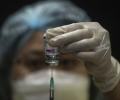
Pune-based Serum Institute of India (SII) is sitting on 200 million doses of Covishield that were manufactured in December and are set to expire in September. The company is likely to destroy these vaccines if nothing works out, Sohini Das reports.
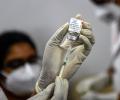
The NIH said results of two studies of blood serum from people who had received Covaxin suggest that the vaccine generates antibodies that effectively neutralise the B.1.1.7 (Alpha) and B.1.617 (Delta) variants of SARS-CoV-2, first identified in the United Kingdom and India, respectively.

'Just put a patch on your arm and the vaccine can be absorbed by the body.'

Addressing a press briefing, Union Health Secretary Rajesh Bhushan said Zydus Cadila, Sputnik V, Biological E and Gennova are other vaccines also in the pipeline which are in advanced clinical trials in India.

The aim of the mission is to accelerate the development of at least six vaccine candidates and ensure that they are licenced and introduced in market for emergency use at the earliest.

'I can say with confidence that any future SARS-CoV-2 vaccine, developed anywhere in the world, would have to be manufactured in India, if it is to be affordable and of high quality.'

Thanking all, including doctors, nurses, healthcare staff, security personnel and journalists, who have been at the frontline in the fight against the pandemic, the minister said they ensured India reaches the stage when vaccine gets delivered to the people.
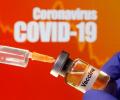
While there has been no commitment from the government on the procurement of vaccines, initial volumes, or distribution plans, there is a likelihood that the low interest loans may be made available to these players only when the time to scale up manufacturing arises.

865 million Indian adults require vaccination.
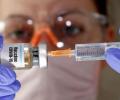
The Indian vaccine industry largely feels there are two ways in which vaccine innovation can be spurred - one, get a high price for the product and two, have the government buy a few hundred million doses of the product at a certain price.
Union Minister Nitin Gadkari on Tuesday said that more pharma companies should be allowed to manufacture the COVID-19 vaccine in the country during the pandemic to scale up production.
Several private hospitals across the country said they have no clarity on procuring COVID-19 vaccines under the new policy announced by Prime Minister Narendra Modi and that it has led to the vaccination being put on hold at their centres.
The Centre on April 19 had announced a ''liberalised'' policy, making all above 18 years of age eligible to get vaccinated from May 1. It has also allowed state governments and private hospitals to purchase vaccines from manufacturers.

The government plans to immunise 30 million people in the first phase, starting February, and by July, the target is to vaccinate 250 million people, reports Sohini Das.

While the Indian government has been procuring Covid-19 vaccines at low prices so far, manufacturers have to declare the prices of vaccines they would supply to the open market (industries, private hospitals, etc) and state governments before May 1. Sohini Das reports.
'The residents are a bit apprehensive about the lack of complete trial in case of Covaxin and might not participate in huge numbers thus defeating the purpose of vaccination. We request you to vaccinate us with Covishield which has completed all stages of trial before its roll-out'
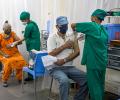
The Bombay high court on Saturday directed the central government to file an affidavit detailing the manner and methods of allocating COVID-19 vaccines to states.
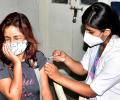
Starting July 1, private hospitals in the country will no longer be allowed to directly procure COVID-19 vaccines from manufacturers and have to place orders on the Centre's CoWIN portal.
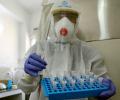
Three COVID-19 vaccine candidates, including two indigenous ones, are in different phases of development in India.
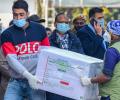
Each vaccination session will cater to a maximum of 100 beneficiaries and the Union Health Ministry has advised states not to organise 'unreasonable numbers of vaccination per site per day'.
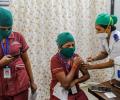
At 8 million a month, times two doses, it will take us 17 years to administer the vaccine to our 800 million adults. The rollout must speed up twenty times, asserts Naushad Forbes.

Serum Institute of India CEO Aadar Poonawalla has said that the production of Covid-19 vaccine Covishield is in full swing in Pune and he will review the operations once he is back in the country in a few days. Poonawalla is currently in the UK to meet his family members.
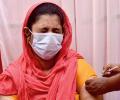
The government on Tuesday set the maximum price private hospitals can charge for the three COVID-19 vaccines currently available in the country -- Covishield Rs 780 per dose, Covaxin Rs 1,410 and Sputnik V Rs 1,145.
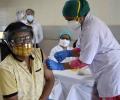
"There is no sufficient supply of vaccine vials by the Centre for inoculation of above-45 age group people. Hence, the state cabinet decided to divert the stock, purchased for the 18-44 age group, for the above-45 age group," Health Minister Rajesh Tope said.

The remarks come amid suspected cases of COVID-19 reinfection being reported from abroad and from Indian states like Telangana, Karnataka, Gujarat, Punjab and Maharashtra.
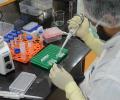
According to government sources, the matter was discussed by the national expert group on vaccine administration for COVID-19 in its last meeting held on August 22.

The Indian Olympic Association secretary general Rajeev Mehta on Monday requested the Union Health Minister Harsh Vardhan to expedite the process for the vaccination of the country's Tokyo Olympic-bound athletes and officials against COVID-19.
As India prepares to launch its vaccine drive on January 16, here is a look at the options:
The Serum Institute of India, the largest vaccine maker in the world, has been chosen by Oxford and its partner AstraZeneca to manufacture the vaccine once it is ready. Trials results for the first two phases were published earlier this month.

About 18-19 coronavirus vaccine candidates are in different clinical trial stages and may be available in the coming months, Health Minister Harsh Vardhan said on Monday.

According to CoWIN data, only 73 vaccination centres are currently active in India, of which 32 are government-run.

Even as the inoculation drive against COVID-19 is set to start in two days, a Maharashtra government official said on Thursday that it will take six to seven months for the vaccine to become available for those who are not in the high-risk category.

The bench, which was critical of the Centre's stand on the issue, said "You (government) are so short of vaccines and you are not taking it through. May be it is an opportunity for you. Don't be so negative. It is like a raging fire and nobody is bothered. You people don't understand the larger picture or what.
Phase-I clinical trials have revealed "excellent safety" of the two candidate vaccines indigenously developed by Bharat Biotech in collaboration with Indian Council of Medical Research and Cadila Healthcare Ltd and their immunogenicity testing is now in progress, minister of state for health Ashwini Choubey informed the Rajya Sabha on Tuesday.
The procurement and distribution will be centralised though the government is yet to take a call on the initial number of doses that will be procured.
An expert panel of the country's drugs regulatory authority had recommended against granting such approval to the firm at this stage just two days ago, officials said.
Prime Minister Modi has said India's vaccine production and delivery capacity will be used for the benefit of all humanity to fight the COVID-19 pandemic. He said last week India was ready to do everything possible for a healthy planet.
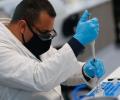
The Centre has also contacted five domestic and three multinational vaccine makers to understand how soon a candidate vaccine against Covid-19 will be ready.

A second wave of Covid driven by the Delta variant engulfed the country in May-June bringing the health system to its knees and leaving people gasping for help.

Health Minister Harsh Vardhan said the COVID-19 vaccine will be available in the next few months and it is estimated that by July-August 400-500 million doses will be made available for 25-30 crore people.
 © 2026 Rediff.com - Advertise with us - Disclaimer - Privacy Policy - Sitemap - Feedback - About us - Terms of use - Grievances